← All work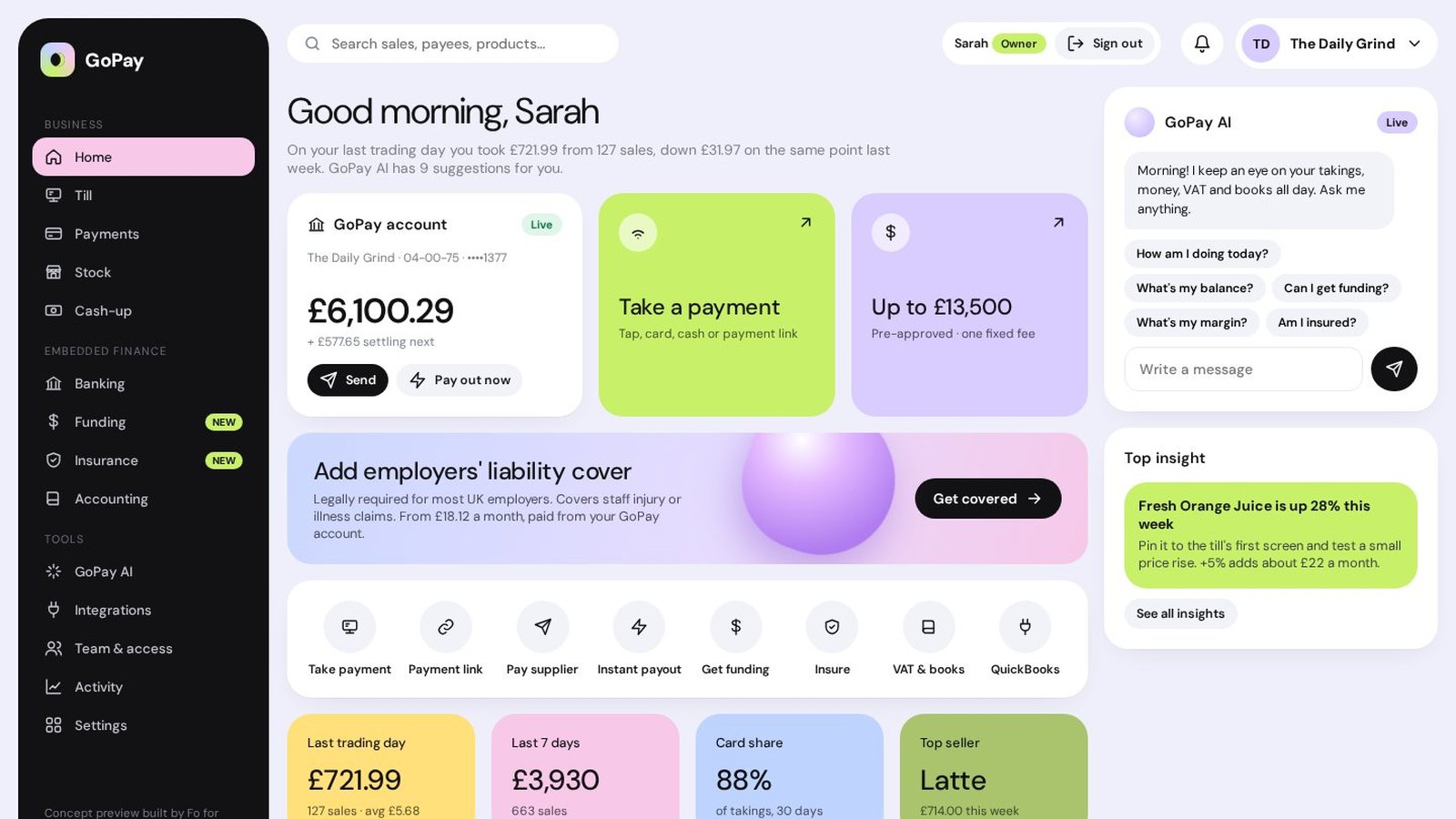
Case study 01 · Fintech · Embedded finance
GoPay.
Get paid. Bank it. Grow it. All from the till.
Case study 01 · Fintech · Embedded finance
Get paid. Bank it. Grow it. All from the till.
A café owner on a UK high street takes payments on one device, banks somewhere else, chases a loan with a third provider, buys insurance from a broker and pays an accountant to re-type it all for VAT. Every one of those already depends on the same thing: what went through the till.
Tools like Epos Now made the till smart. The money side around it is still scattered, and small businesses pay for that in time, fees and missed warnings.
So the brief: start from the till, and build the bank account, funding, cover and books on top of the sales data it already has.
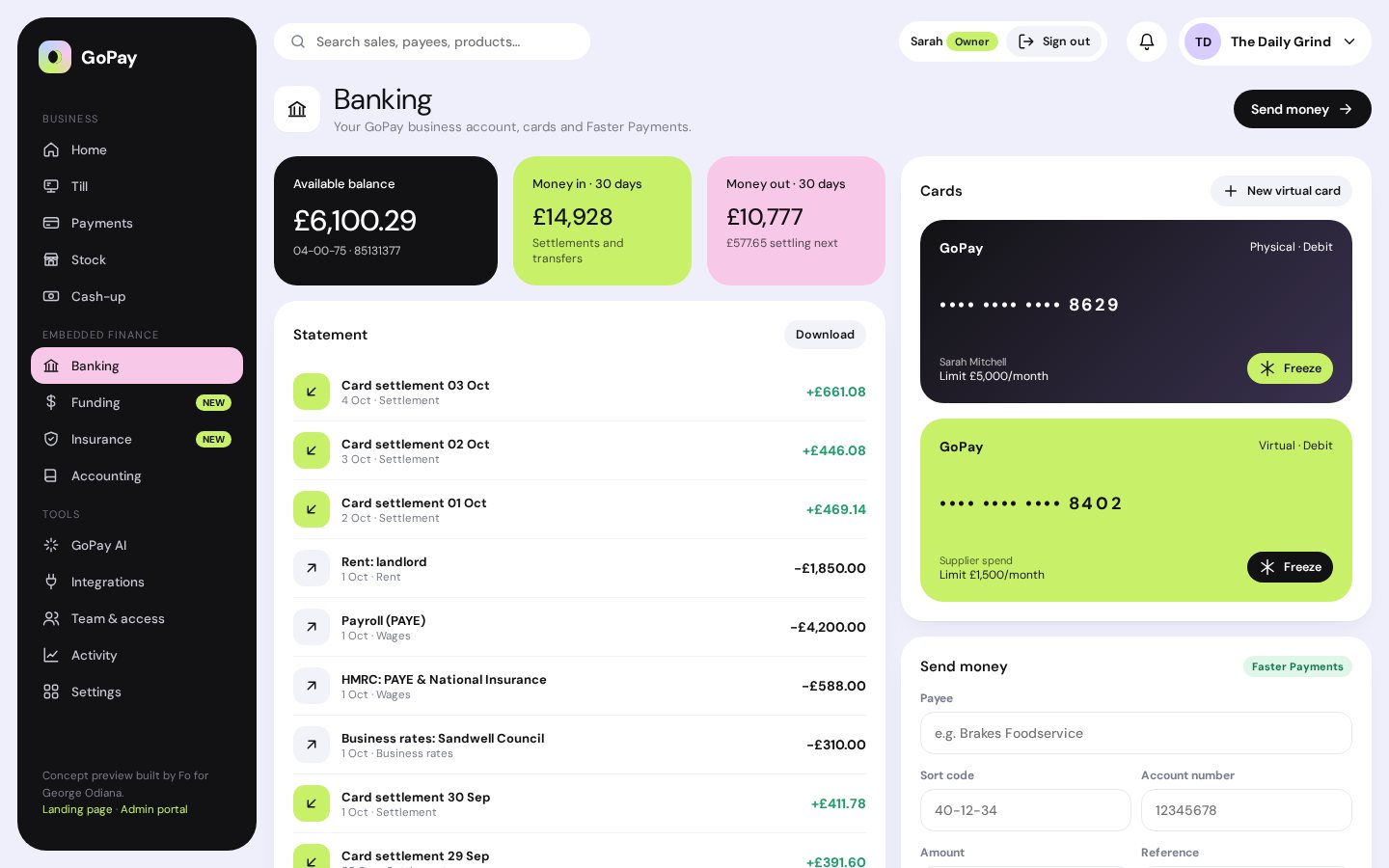
Banking, Funding, Insurance and Accounting sit in the same sidebar as Till and Stock. Money from card sales settles into a GoPay account with its own sort code, cards and Faster Payments.
Funding offers come from 30 days of card takings: one fixed fee, no interest, repaid as a share of future card sales. Nothing changes until the owner accepts.
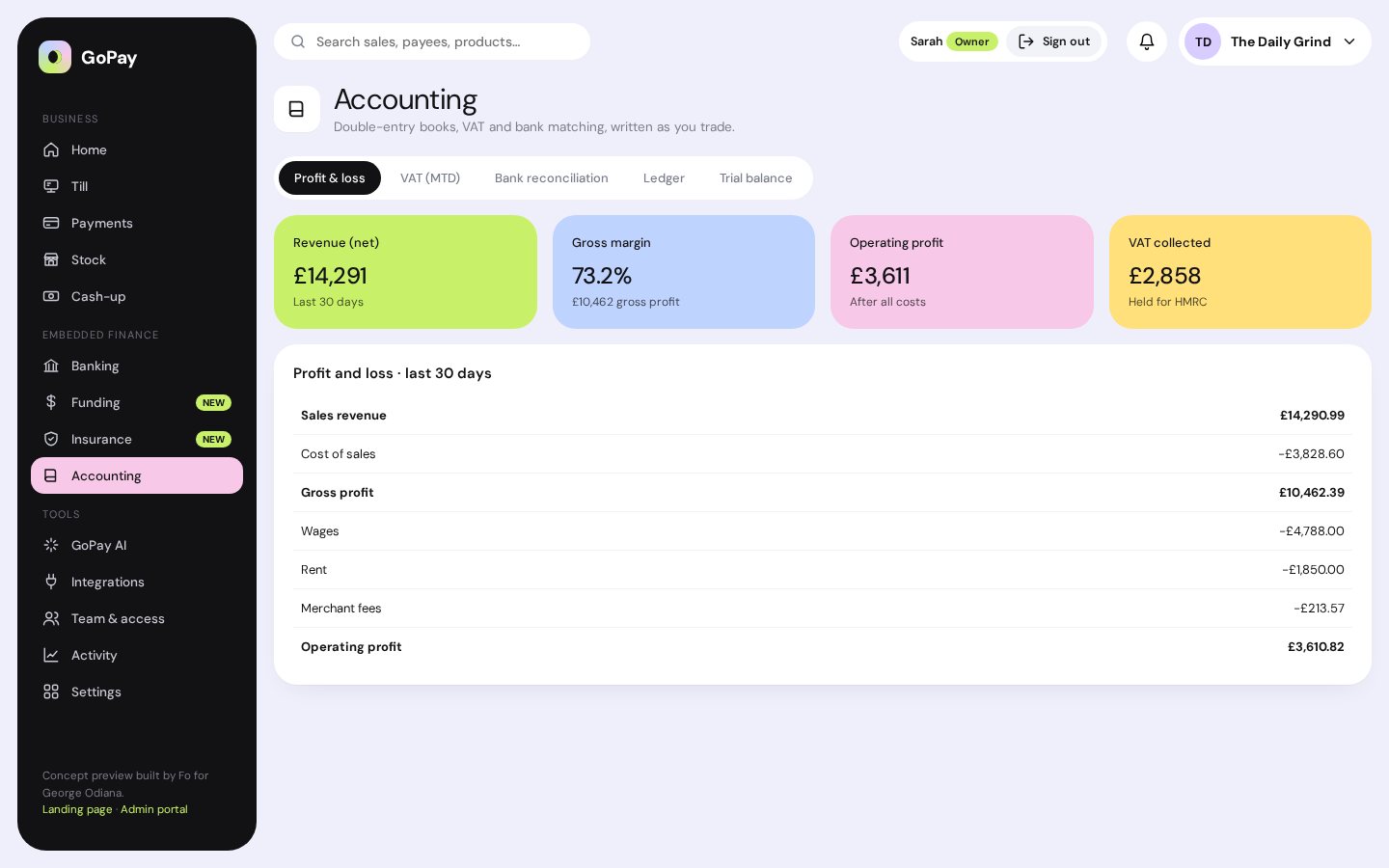
Every sale, refund and payout posts to a double-entry ledger, so profit and loss, VAT for Making Tax Digital and bank matching are ready without an export. QuickBooks sync is there for owners who already use it.
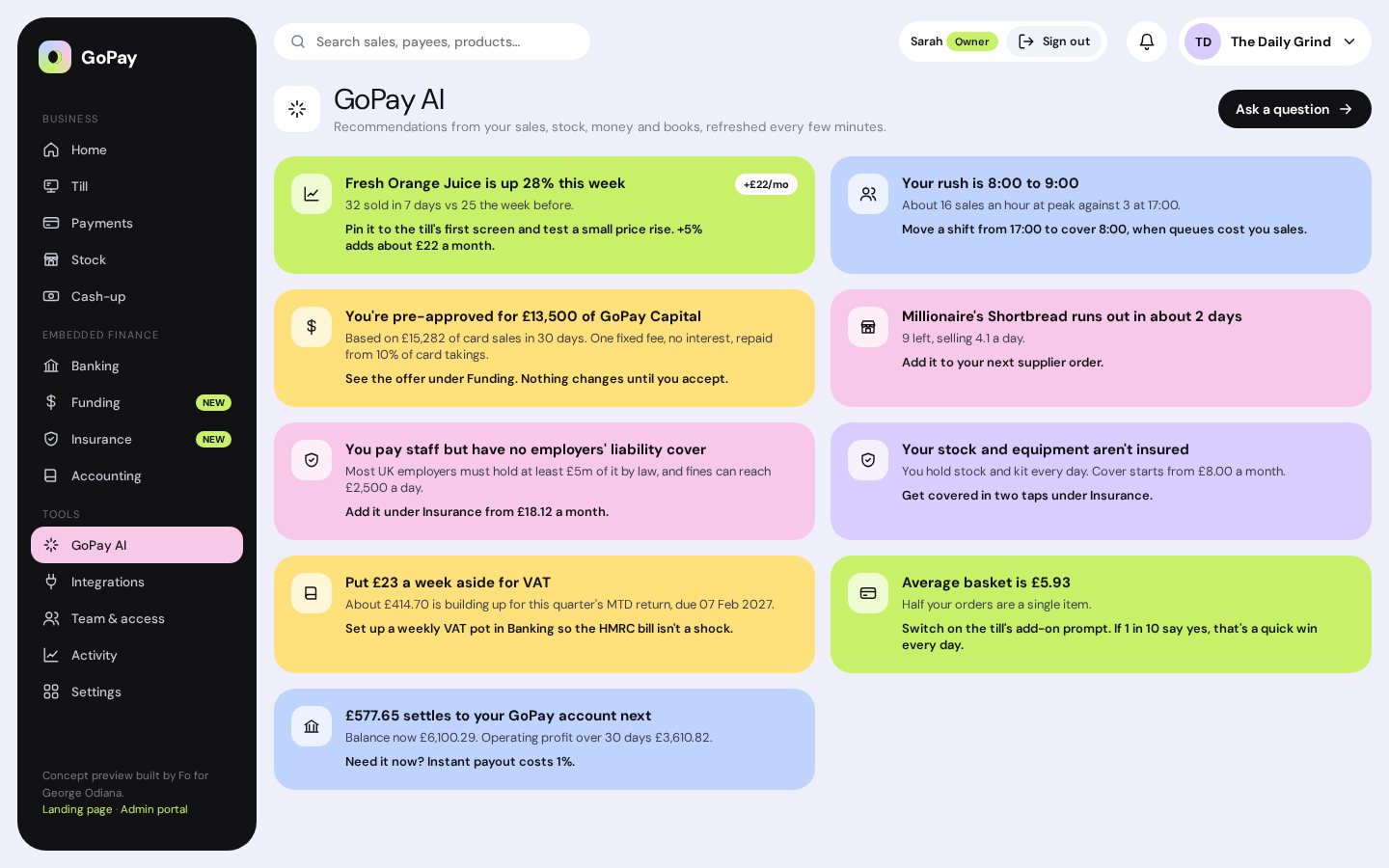
GoPay AI reads sales, stock, money and books, and each insight ends with one action: pin a product, move a shift, set money aside for VAT. It suggests; the owner decides.
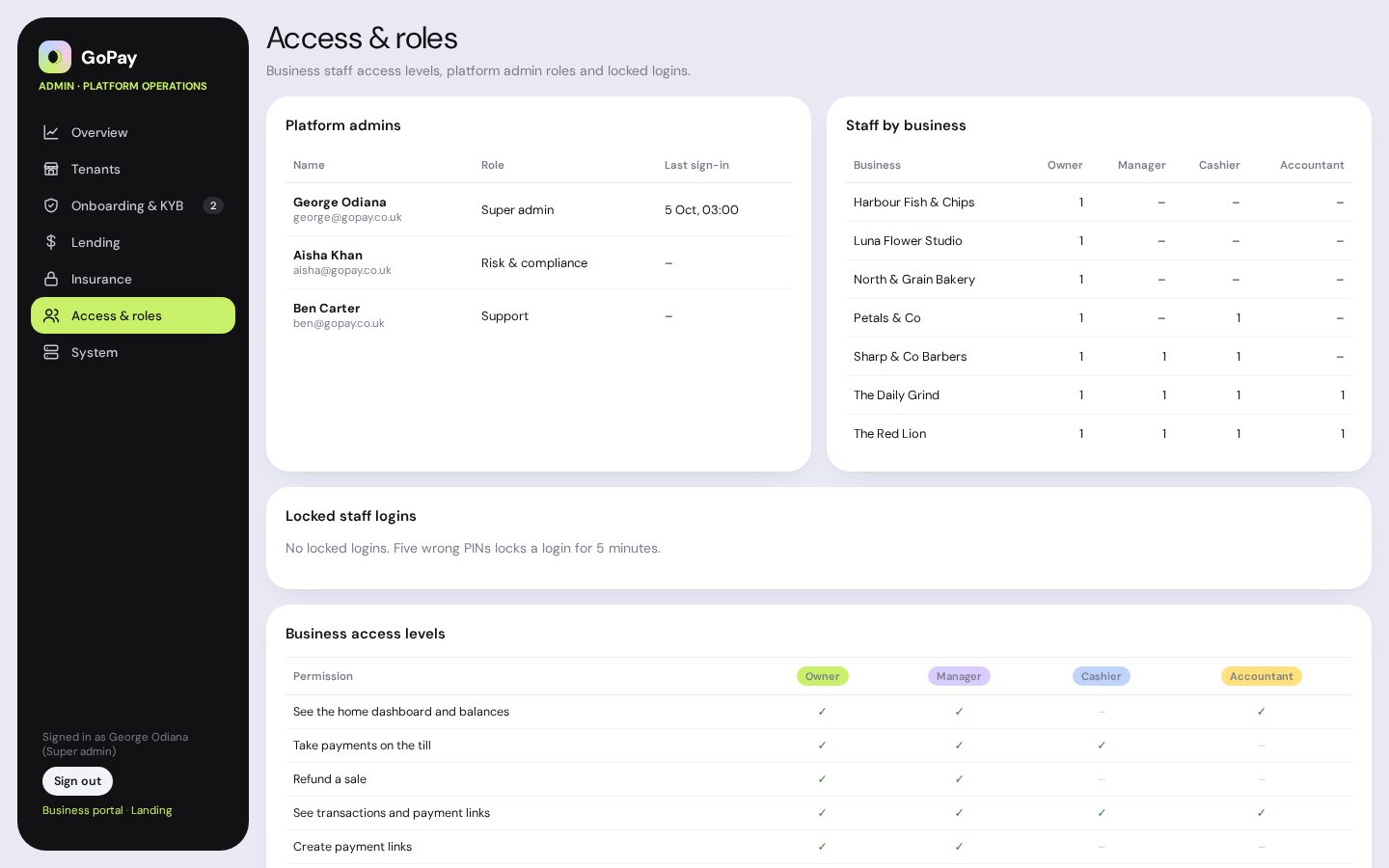
Owners, managers, cashiers and accountants sign in with their own PIN. A cashier sees the till and cash-up, never the bank balance; a manager can send up to £1,000 and no more.
Each café, pub, florist or barber is its own tenant. The admin portal handles onboarding and Companies House checks, lending, insurance and platform roles for the GoPay team.
Most dashboards show charts and leave the thinking to the owner. GoPay AI turns the same data into short, plain-English cards, each with the evidence and one thing to do.
In the demo café it spots that fresh orange juice is up 28% in a week, that the rush is 8 to 9am while a shift sits idle at 5pm, that shortbread runs out in two days, and that staff are on payroll without employers' liability cover.
Owners can also just ask: "How am I doing today?", "Can I get funding?", "Am I insured?"
Because the till, the bank account and the ledger are one system, the accounting view is always current: profit and loss, VAT owed for the quarter, bank reconciliation, the full ledger and a trial balance that has to match to the penny. Refunds reverse the books and put items back into stock in the same step.
GoPay is a concept running on sample businesses, so these are targets, not results.
I designed and built GoPay, and made the product calls: which finance products sit beside the till, how funding is priced, what each staff role can and can't see, and how the AI should phrase advice. The front end and back end are one web app with a real API, staff permissions checked on the server for every request, and books that must balance.
It's a concept: no real money moves, and the lending, insurance and banking partners are simulated.
"The best place to sell a small business finance is the screen they already open fifty times a day."