← All work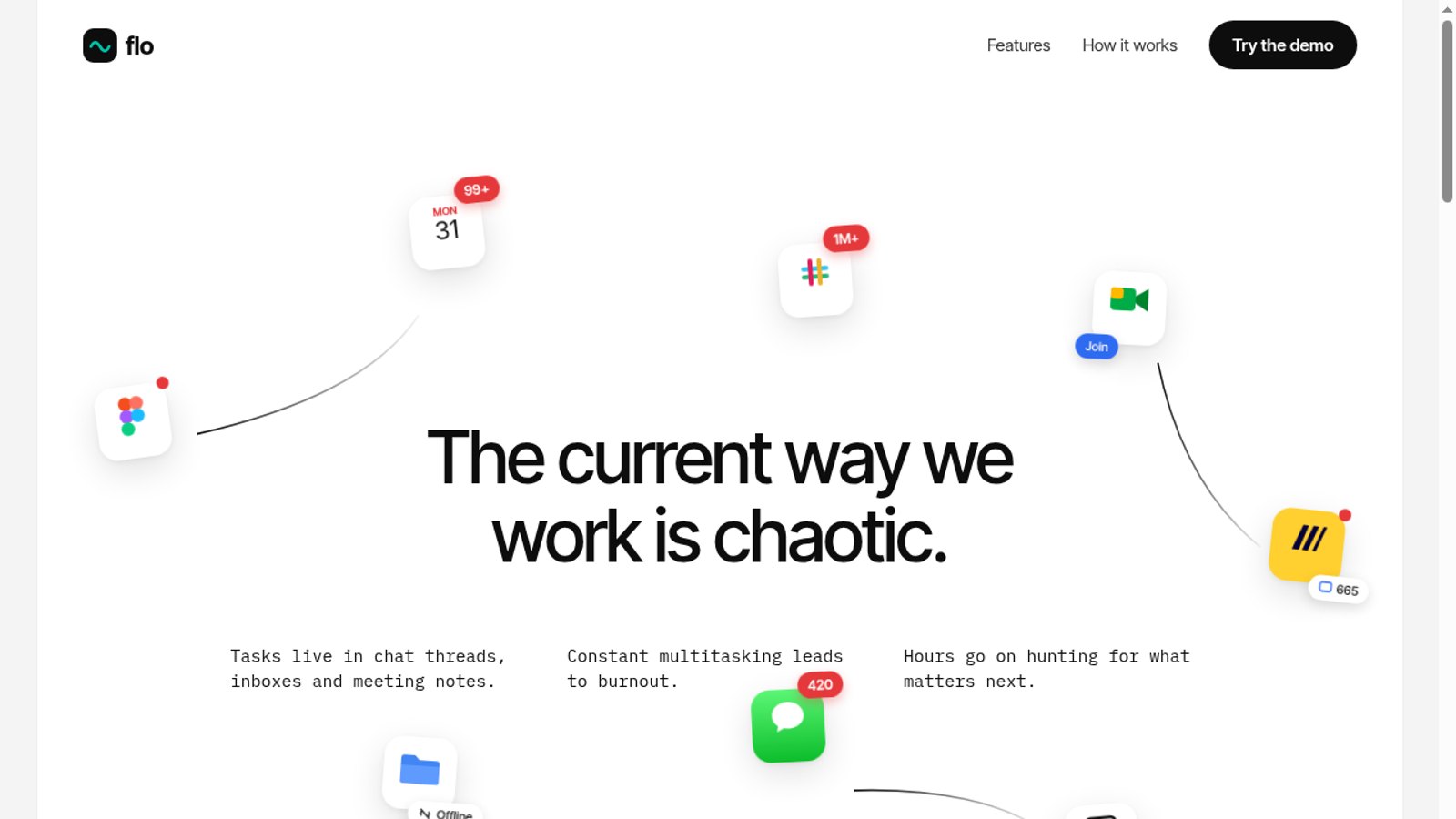
Case study 02 · B2B SaaS · Productivity
Flo.
One place for a team's work, requests, approvals and time.
Case study 02 · B2B SaaS · Productivity
One place for a team's work, requests, approvals and time.
Most teams plan in one tool, take requests in chat and email, run meetings in a calendar and track time somewhere else. Each one is fine on its own. Together they leave the same gaps: a request from another team gets lost in a thread, a manager can't see who is overloaded, and the hours that feed client invoices are rebuilt from memory on a Friday.
Cross-functional work suffers most. Sales asks Legal for a contract review, Design asks Engineering for a fix, and the ask has no owner, no due date and no way to say no politely.
So the brief: one place where a person sees their day, a team sees its load, and a business sees where the time and money went.
Asks between teams get an owner, a reply-by date and an accept, decline or counter, so nothing waits silently in chat.
Each person has a work-in-progress limit and a top three for today. Flo nudges before people overcommit.
Meetings sit next to tasks, and free slots can be blocked for focus in one click.
Timers, timesheets, approvals, billable rates and invoices live with the work, not in a second tool.
Sign-offs and timesheet approvals go to the right approver with the context attached.
Each workspace has its own people, plan and settings, with a business portal for owners and an admin portal for the Flo team.
Toggl-style tracking runs inside Flo: start a timer from any task, log meetings from the calendar, and submit a weekly timesheet for approval. Rates and budgets sit on each project, with alerts at 80% and 100% of budget.
Reports turn that into utilisation by person, estimates against actuals, a CSV export and a printable invoice per client with VAT.
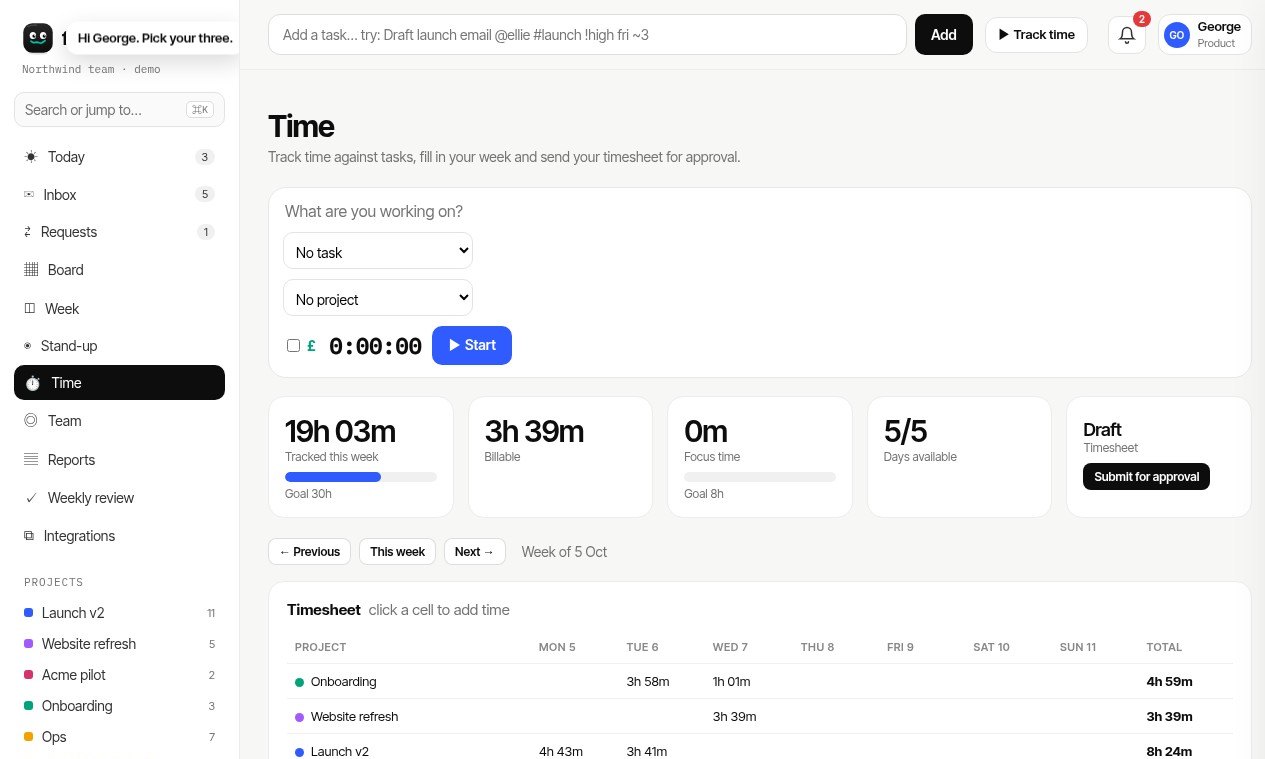
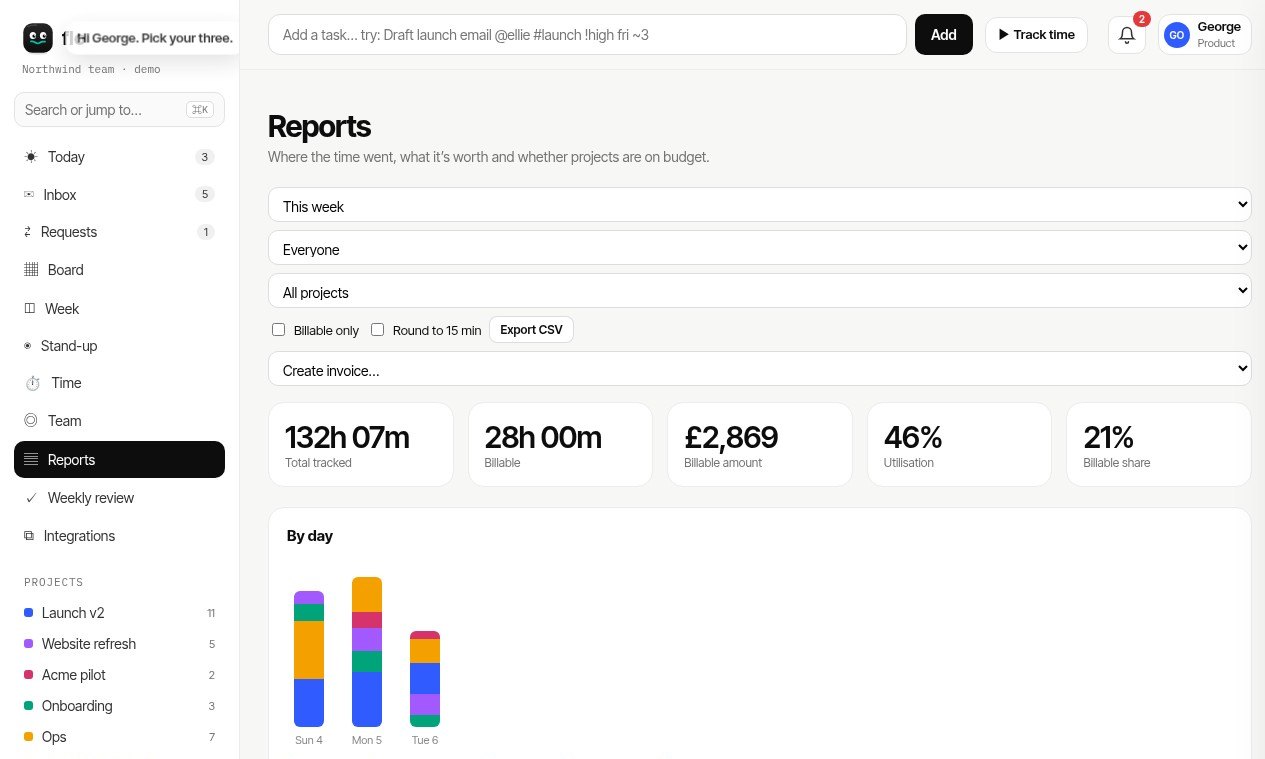
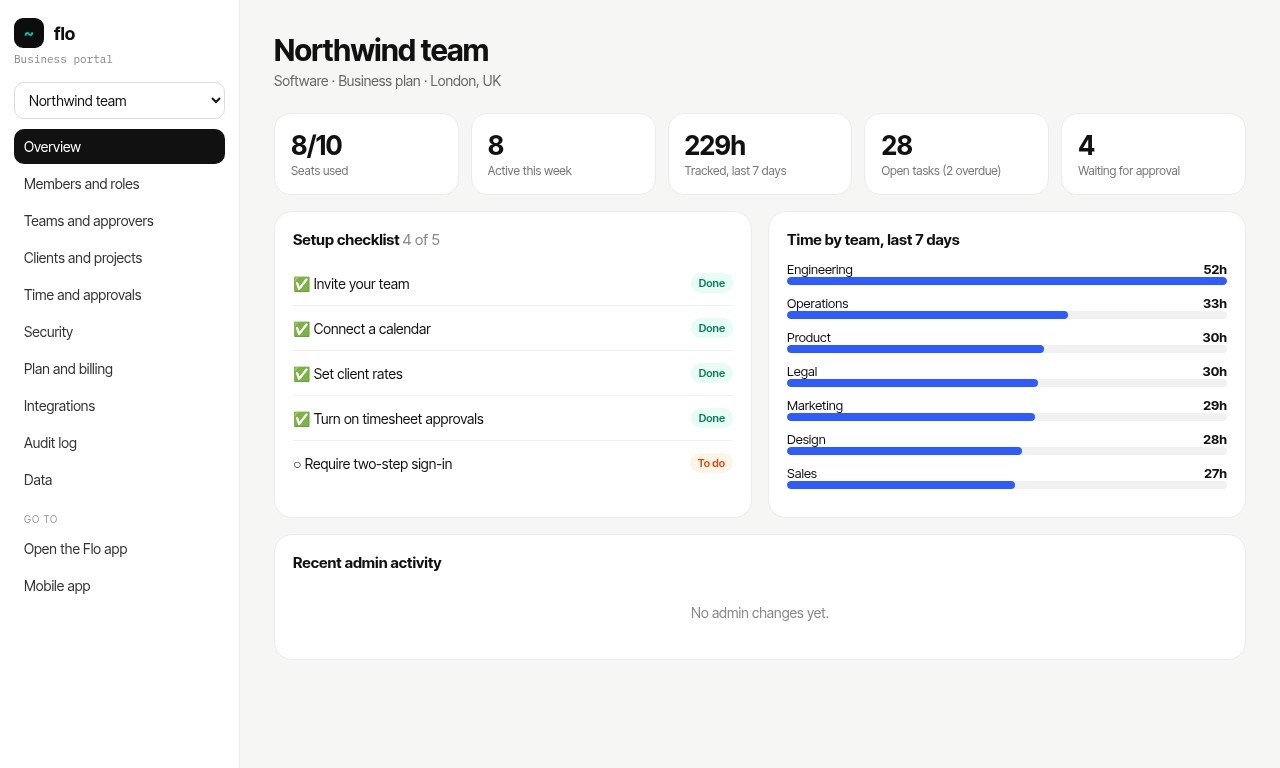
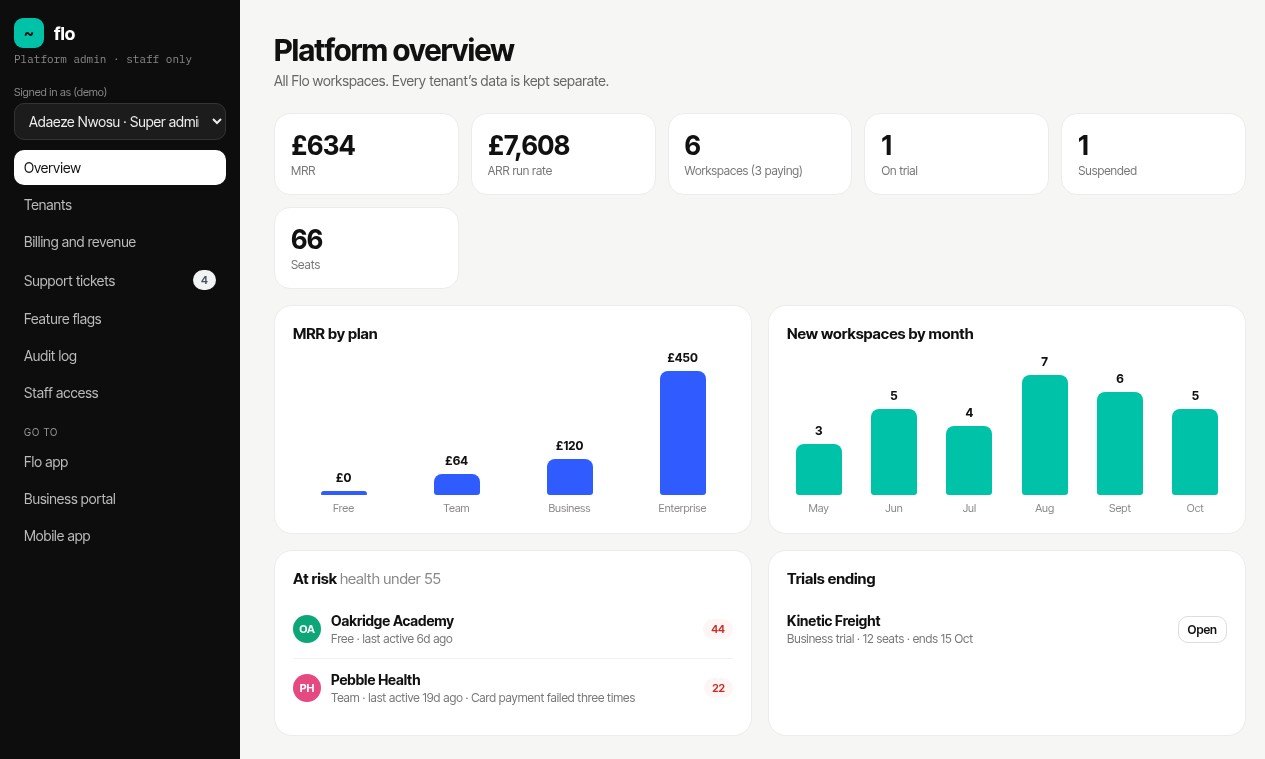
Team members use the app. Workspace owners run members, roles, approvers, security and billing in the business portal. The Flo team runs every workspace from the admin portal: plans, trials, credits, suspensions, feature flags and support tickets, with staff access levels and an audit log.
The north star is weekly active teams that run their week in Flo, measured alongside:
The hardest calls were about what to leave out. Every feature had to earn its place by removing a step somewhere else, which is the same test I apply to any platform roadmap.