← All work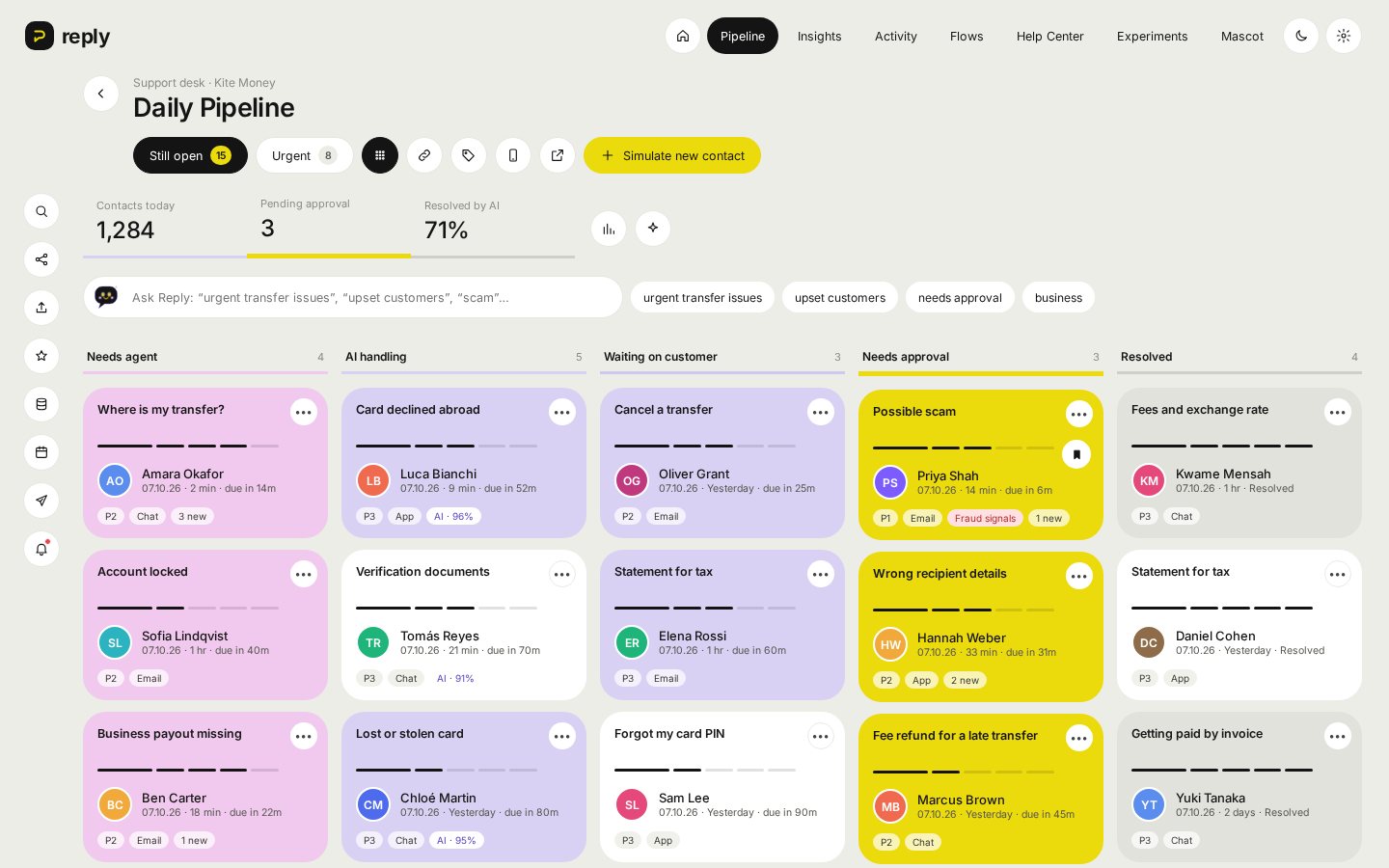
Case study 03 · AI · Customer support
Reply.
An AI support desk that solves the easy chats and hands over the hard ones well.
Case study 03 · AI · Customer support
An AI support desk that solves the easy chats and hands over the hard ones well.
Support for a money app is mostly the same few questions: where is my transfer, why was my card declined, what does this fee mean. Those are ideal for an AI assistant. But the rest are the moments that matter most: a possible scam, a locked account, money sent to the wrong person.
Most AI support tools either answer everything, including things they shouldn't, or hand over a bare transcript so the agent starts from zero and the customer explains it all again.
So the brief: let the assistant resolve what it safely can, and when it hands over, give the agent the summary, the account facts and a draft reply in one place.
The assistant answers on its own only above a threshold the support lead chooses. Below it, the chat goes to a person with a summary of what the customer wants.
The assistant can suggest a refund, a recall or a cancellation, but those sit in Needs approval until an agent says yes. Safe steps like sharing tracking it can do itself.
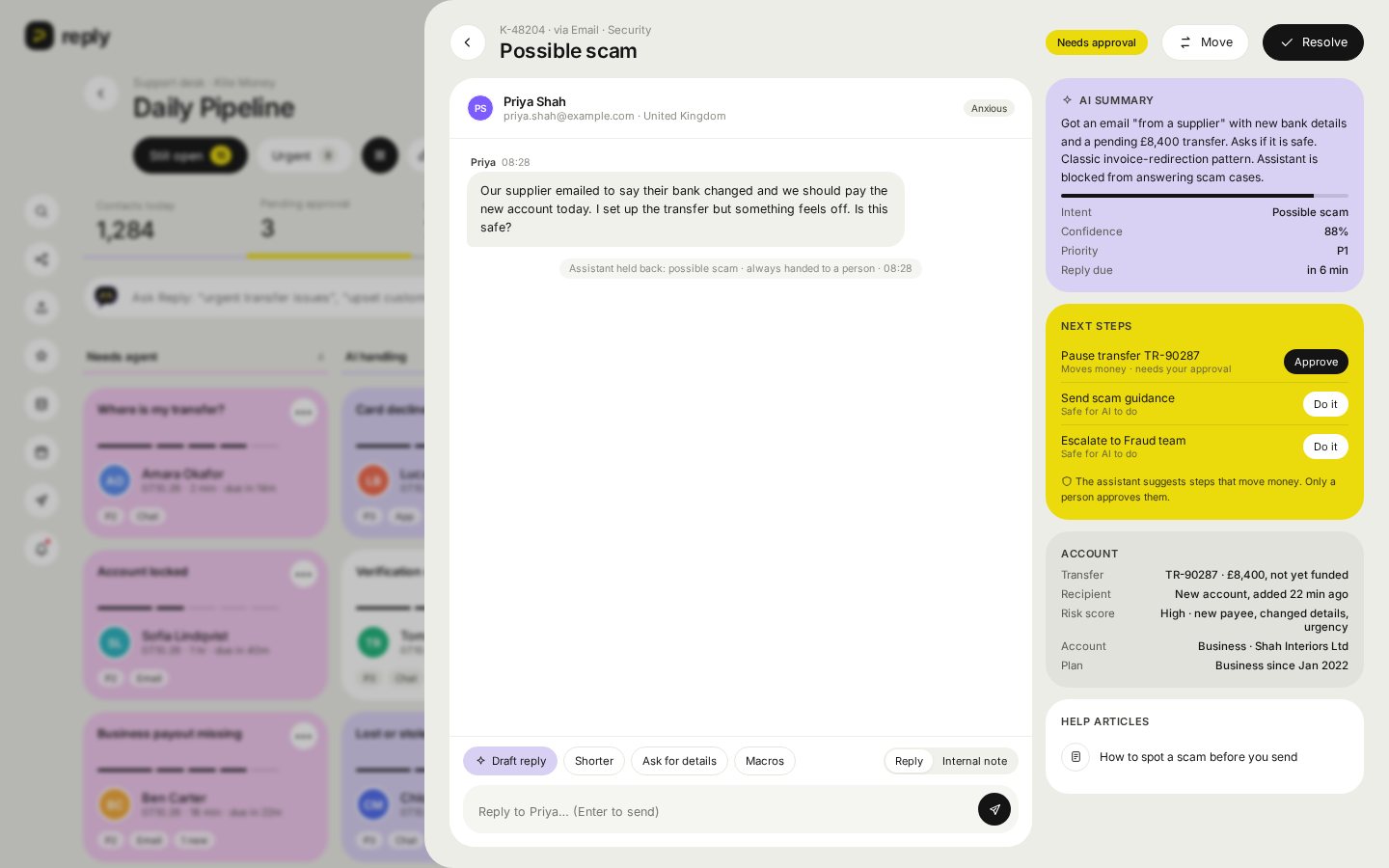
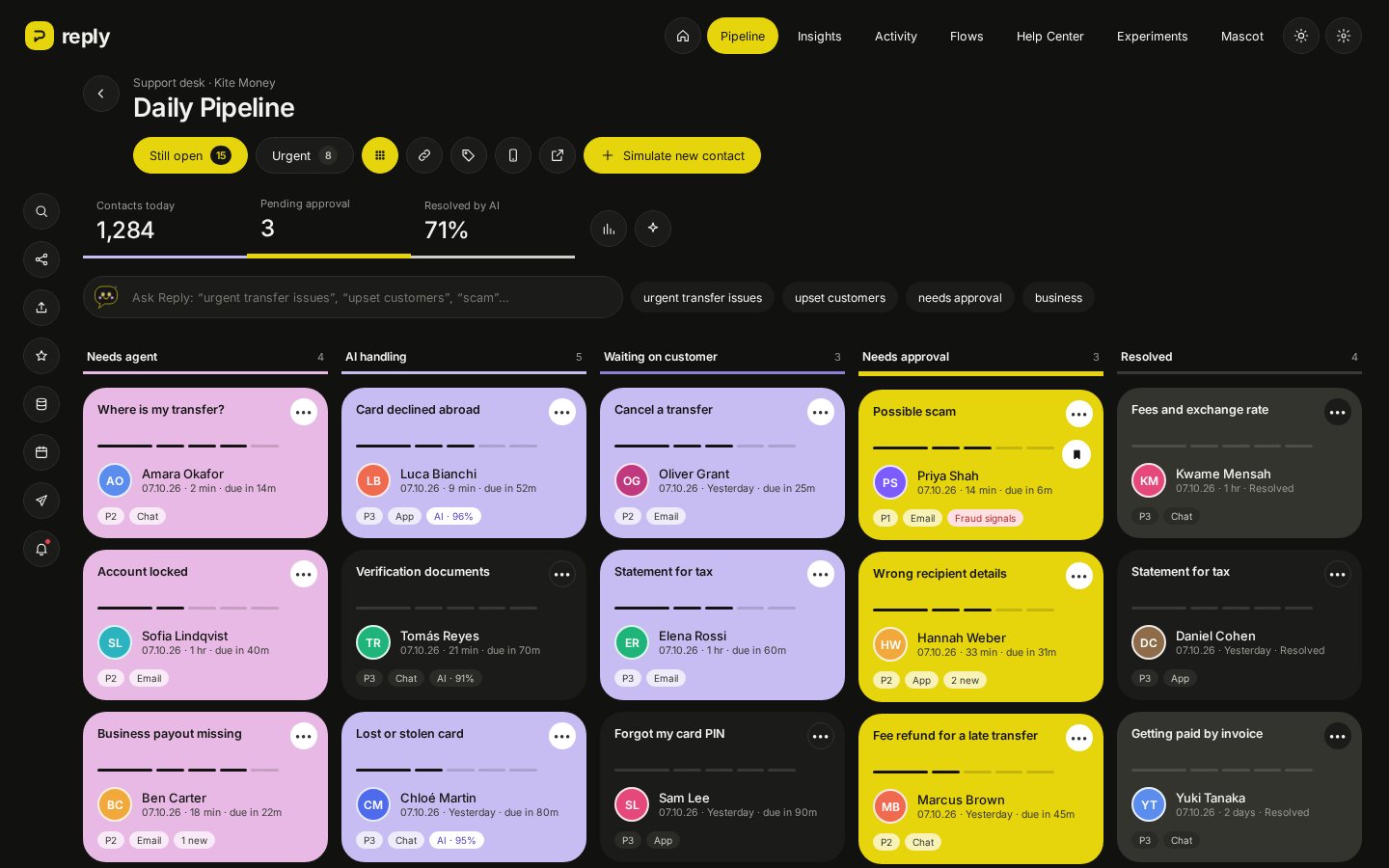
Anything that looks like a scam or account takeover skips the assistant and goes straight to an agent as P1. That rule can't be switched off.
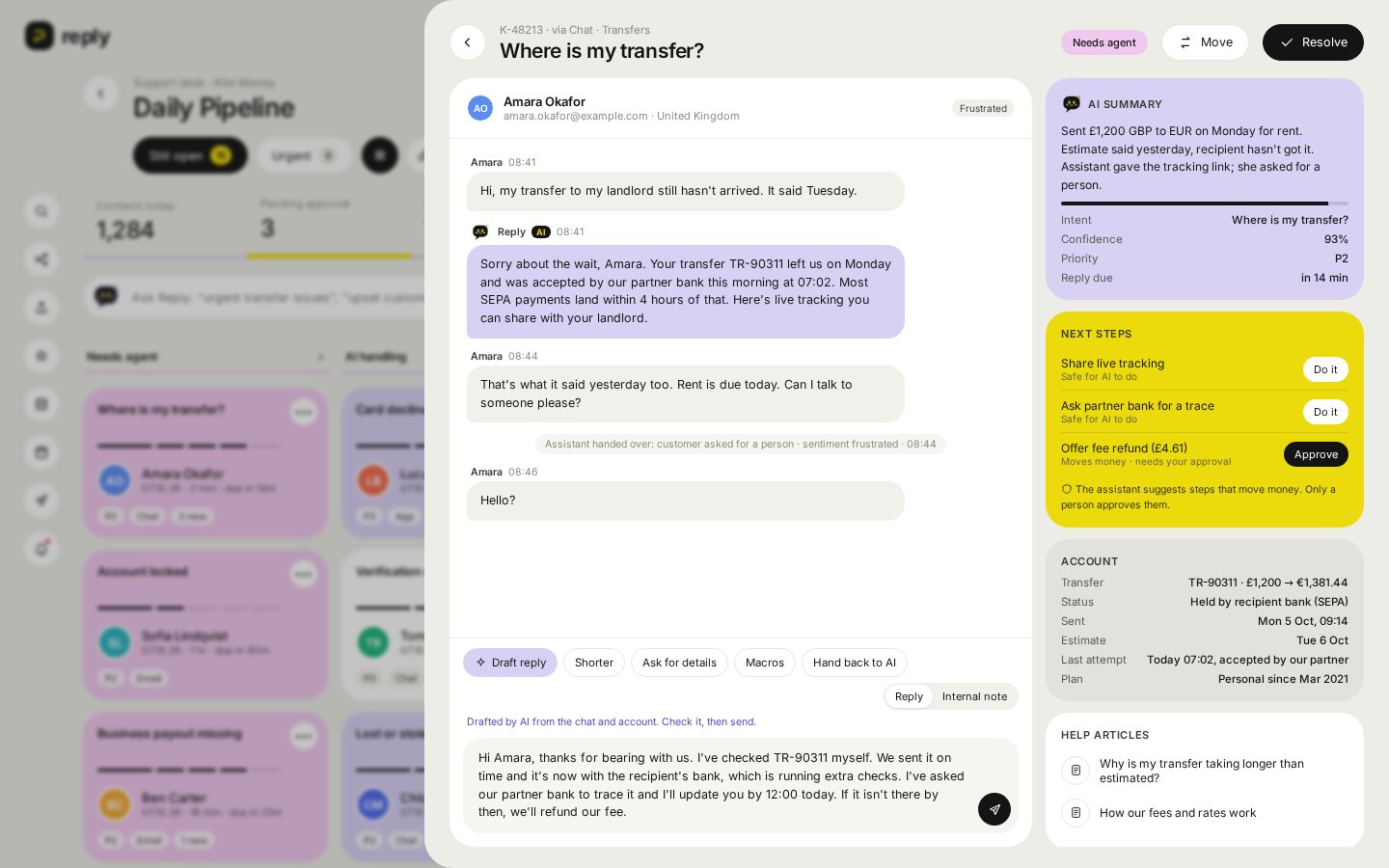
Agents open a ticket to find the AI summary, intent, confidence, account facts, next steps and a draft reply. The customer never has to repeat themselves.
Reply reads sentiment. A frustrated or angry customer goes to a person, even when the assistant is confident it could answer.
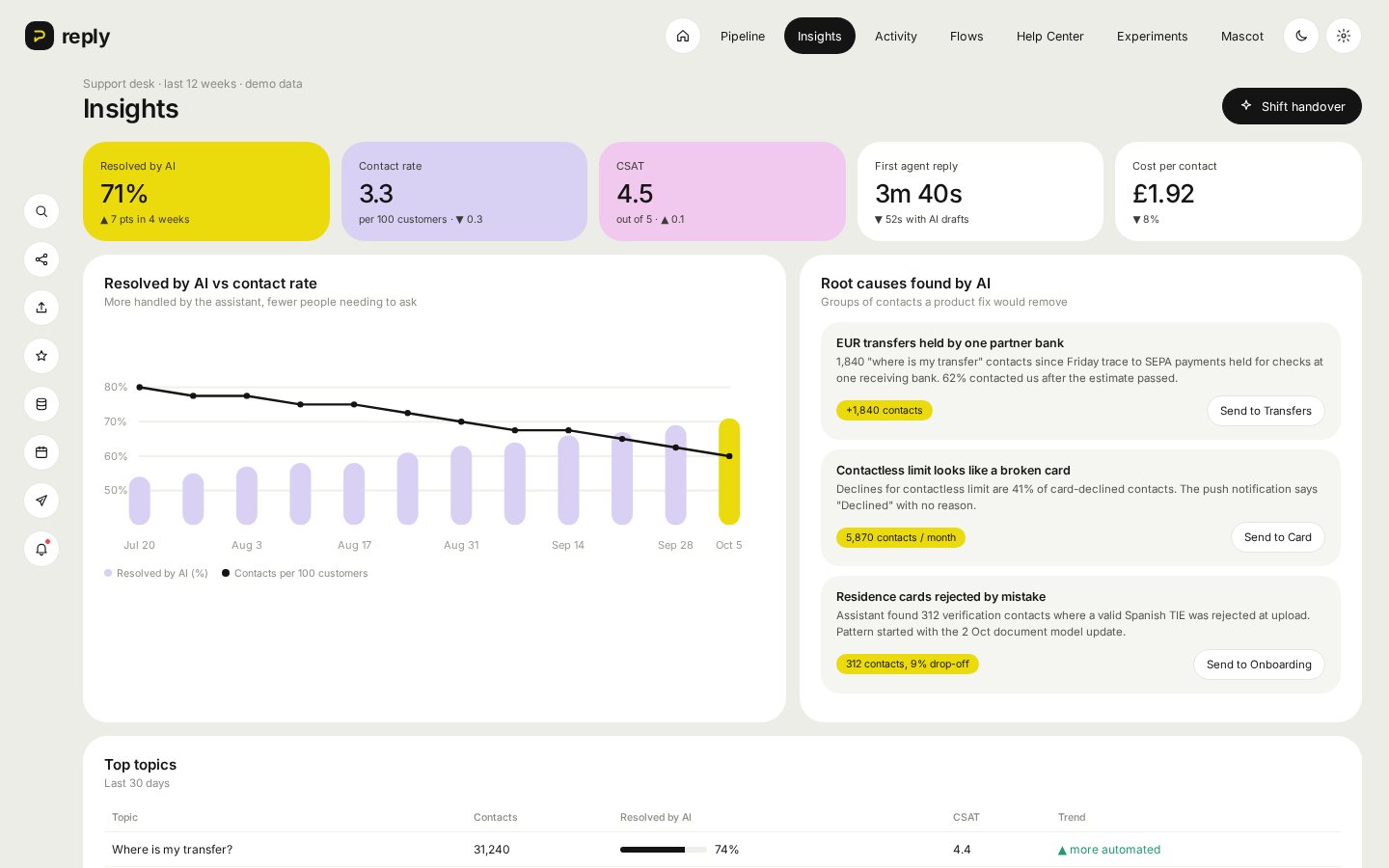
The AI groups contacts into root causes, like one partner bank holding transfers, and sends them to the product team that can remove the contact for good.
Open a ticket and the conversation sits next to the AI's read of it. The agent can draft a reply, make it shorter, ask for missing details, use a saved reply or leave an internal note for the team.
Next steps are split by risk: the assistant can do the safe ones, and anything that moves money waits for the agent to approve. On a scam ticket the assistant stays silent and the account lock is one approval away.
Support teams work shifts, so Reply has a full dark mode that follows the device setting. Pastel cards keep their colour so the stages still read at a glance.
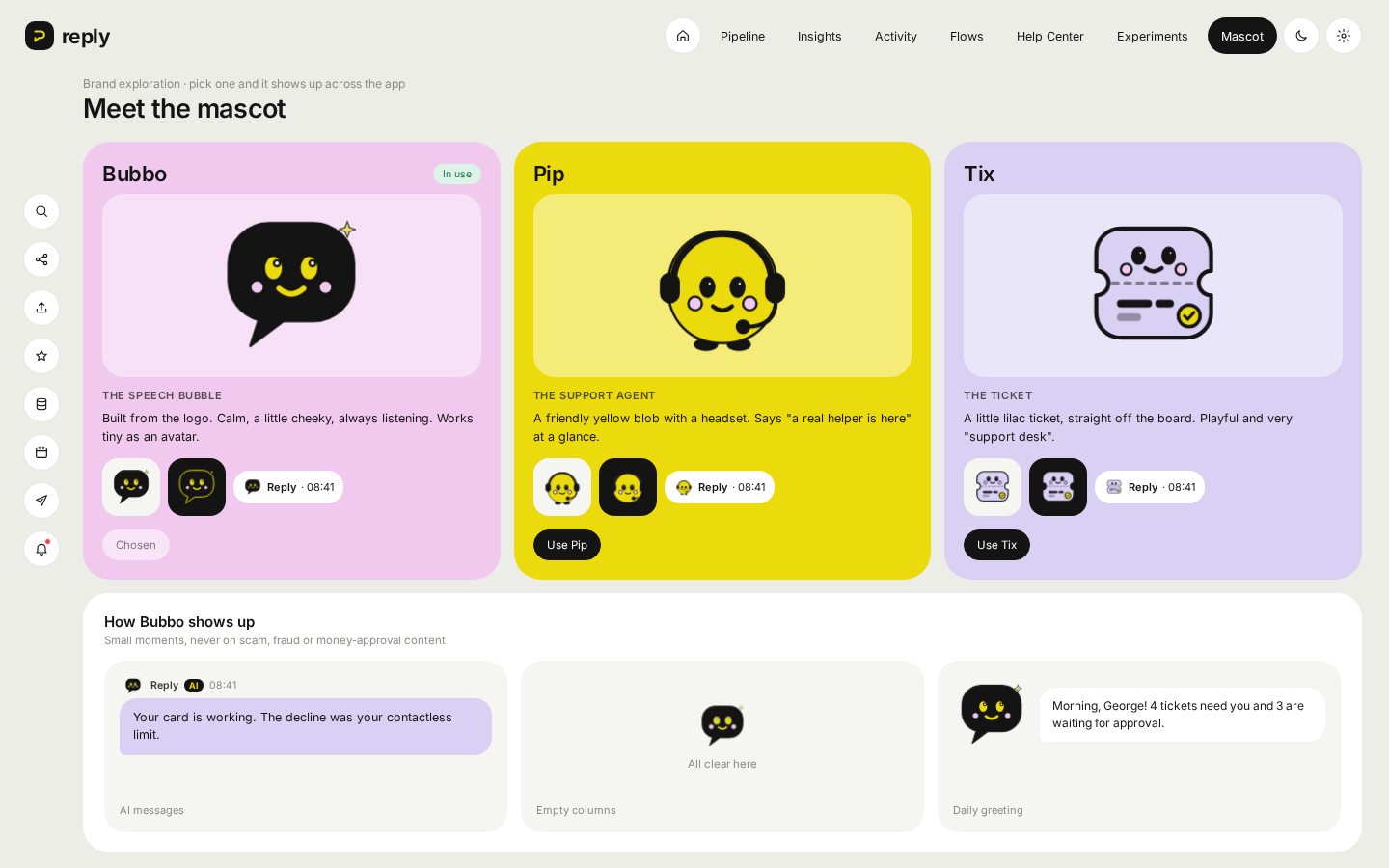
Bubbo, a speech bubble taken from the logo, is the assistant's face. It shows up on AI messages, summaries and empty columns, and stays off scam and fraud tickets where a friendly face would feel wrong.
Reply is a concept running on sample tickets, so these are targets, not results.
I designed and built Reply, and made the product calls: where the assistant's authority ends, which steps need approval, what a good handover holds, how tickets move through the day and how it looks in light and dark. It's a fast static web app; replies, notes and settings save in the browser.
It's a concept: Kite Money, the customers and every ticket are made up.
"The best AI support isn't the one that answers everything. It's the one that knows when to hand over."